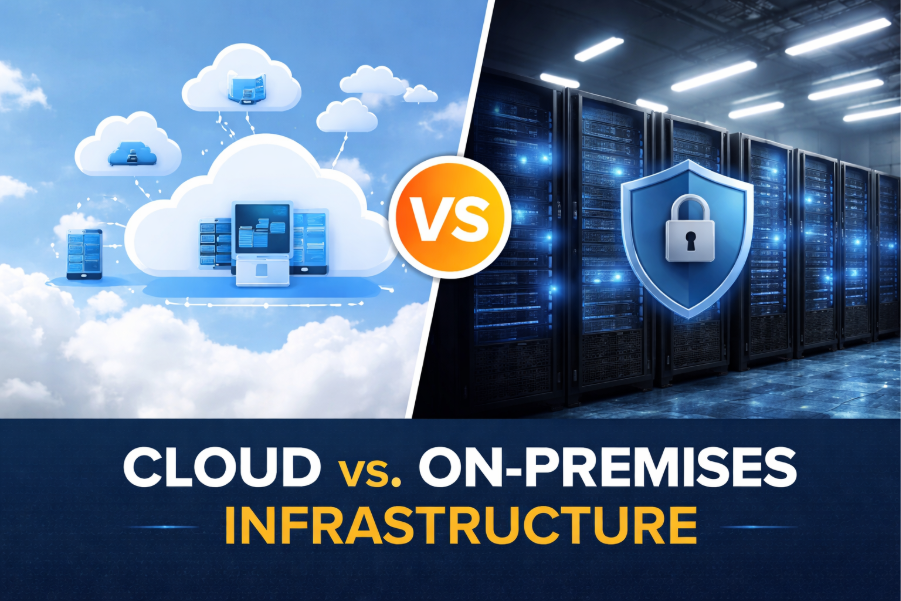
In today’s competitive business landscape, choosing the right IT infrastructure is a critical decision that directly impacts growth, efficiency, and long-term success, especially when evaluating a cloud computing service for modern operations. Businesses in Newburyport are increasingly considering whether cloud or on-premises systems better suit their operational needs. With rapid advancements in technology, this decision is no longer just about storage but about scalability, cost management, and accessibility.
Axis Computer Networks understands that every organization has unique requirements, especially when balancing performance, compliance, and flexibility. Decision-makers must evaluate not just current demands but also future growth expectations. This blog explores both models in depth, helping IT managers and technical buyers make informed decisions backed by practical insights and data-driven comparisons.
Cloud Infrastructure Benefits for Growing Firms
Cloud infrastructure has transformed how businesses operate by offering flexibility and reduced upfront costs. It allows companies to access computing resources over the internet without maintaining physical servers. For businesses that are new to this concept, understanding the basics is essential. You can explore this detailed guide on cloud fundamentals here: https://axisdev.8wavescreative.com/what-is-cloud-computing-and-why-newburyport-businesses-should-care/
Cloud solutions enable businesses to adapt quickly to changing demands without significant investment in hardware. They are ideal for organizations looking to streamline operations while maintaining high performance. The subscription-based model also makes budgeting more predictable.
- Minimal upfront investment compared to traditional infrastructure
- Scalable resources that grow with business needs
- Easy access for remote and hybrid work environments
- Automatic updates and reduced maintenance responsibilities
- Integration with modern applications and collaboration tools
On-Premises Systems Offer Greater Control
On-premises infrastructure involves hosting servers and systems within your own physical location. This model gives organizations complete control over their data and systems, making it a preferred choice for industries with strict compliance requirements.
Businesses that rely heavily on data privacy and customization often lean toward this approach. It allows for tailored configurations that align closely with operational needs. However, it also requires significant investment and ongoing management.
- Full ownership and control of hardware and data
- Enhanced customization for specific workflows
- Improved data privacy and compliance management
- Reliable performance without internet dependency
- Suitable for industries requiring strict regulatory adherence
Cost Comparison and TCO Analysis Insights
Understanding the financial implications is essential when comparing cloud and on-premises solutions. A detailed TCO analysis helps businesses evaluate long-term costs beyond initial investments. This includes maintenance, upgrades, and operational expenses.
Cloud models typically operate on OPEX, while on-premises systems rely on CAPEX. Each approach has its advantages depending on business size and growth plans. Organizations must carefully assess both short-term and long-term financial impacts.
- Cloud reduces upfront capital expenses but adds recurring costs
- On-premises requires high initial investment but lower ongoing fees
- Maintenance and staffing costs vary significantly between models
- Scalability costs differ based on usage patterns
- Budget predictability is higher with subscription-based services
Data Security and Compliance Considerations
Data security remains a top priority for businesses evaluating infrastructure options. Both cloud and on-premises models offer security features, but the level of control and responsibility differs.
Cloud providers invest heavily in security measures, often exceeding what small businesses can implement independently. On-premises systems, however, allow organizations to maintain direct control over sensitive data.
- Cloud providers offer advanced security protocols and monitoring
- On-premises ensures data remains within physical boundaries
- Compliance requirements may favor local data storage
- Risk management strategies differ between models
- Security responsibilities shift depending on infrastructure choice
Hybrid Models Combine Flexibility and Control
Hybrid infrastructure blends cloud and on-premises systems, offering a balanced approach for businesses. This model allows organizations to keep sensitive data locally while leveraging cloud benefits for other operations.
It is increasingly popular among businesses seeking flexibility without compromising security. Hybrid solutions also support gradual migration strategies, reducing disruption during transitions.
- Combines scalability of cloud with control of on-premises
- Enables selective data storage based on sensitivity
- Supports remote work and collaboration tools
- Reduces risk during infrastructure transitions
- Offers cost optimization through strategic resource allocation
Real Business Scenarios and Use Cases
Different industries in Newburyport have unique infrastructure needs. For example, a retail business may prioritize scalability and remote access, while a manufacturing firm may require low latency and data control.
Understanding these scenarios helps businesses align their infrastructure decisions with operational goals. Real-world examples highlight how different approaches deliver value based on specific requirements.
- Retail businesses benefit from cloud scalability during peak seasons
- Healthcare organizations prefer on-premises for compliance
- Professional services rely on cloud for remote collaboration
- Manufacturing firms prioritize local processing speed
- Financial services require strict data security measures
Cloud Technology Services for Scalability Needs
Modern businesses rely on cloud technology services to support growth and innovation. These services enable rapid deployment of applications and seamless integration with existing systems.
They also provide the flexibility needed to adapt to market changes without major disruptions. Businesses can experiment with new solutions while maintaining operational stability.
- Rapid deployment of new applications and tools
- Easy integration with existing business systems
- Support for innovation and digital transformation
- Improved collaboration across teams and locations
- Reduced downtime during upgrades and maintenance
Role of Cloud Computing Providers Today
Choosing the right cloud computing providers is crucial for maximizing the benefits of cloud infrastructure. Providers offer various services, pricing models, and support levels, making selection an important strategic decision.
Businesses must evaluate reliability, security, and scalability when selecting a provider. A strong partnership ensures consistent performance and long-term success.
- Diverse service offerings tailored to business needs
- High availability and uptime guarantees
- Advanced security and compliance features
- Flexible pricing models based on usage
- Technical support and managed services options
IT Support Outsource for Infrastructure Management
Managing IT infrastructure can be complex, especially for growing businesses. Many organizations choose IT support outsourcing solutions to handle maintenance, monitoring, and troubleshooting.
Outsourcing allows businesses to focus on core operations while ensuring their systems remain efficient and secure. It also reduces the need for in-house technical expertise.
- Access to experienced IT professionals
- Reduced operational workload for internal teams
- Faster issue resolution and system monitoring
- Cost savings compared to hiring full-time staff
- Scalable support based on business needs
Decision Guide for Infrastructure Selection
Choosing between cloud and on-premises depends on several factors, including business size, budget, and operational requirements. A clear decision framework helps organizations evaluate their options effectively.
Businesses must consider scalability, security, and long-term goals when making this decision. A structured approach ensures alignment with overall strategy.
- Choose cloud for flexibility and remote access
- Choose on-premises for control and compliance
- Consider hybrid for balanced performance
- Evaluate internet reliability and infrastructure needs
- Align decisions with business growth objectives
Reframed Overview for Smarter Decisions
Selecting between cloud and on-premises infrastructure depends on factors such as company size, budget constraints, regulatory requirements, and the need for remote accessibility. Cloud solutions provide adaptability, reduced upfront costs, and improved collaboration, while on-premises systems deliver stronger control, enhanced privacy, and reliability for specialized operations.
For practical decision-making, businesses can follow a simple approach. Cloud works well for startups and service-based firms needing scalability and mobility. On-premises is better suited for industries requiring strict compliance and high security. Hybrid solutions offer a middle ground, combining the strengths of both models for optimal performance and flexibility.
Conclusion and Final Recommendations
Choosing the right infrastructure is not a one-size-fits-all decision. Businesses must carefully evaluate their operational needs, financial constraints, and long-term goals before committing to a solution. Cloud offers flexibility and scalability, while on-premises provides control and security. Hybrid models deliver a balanced approach for many organizations.
Axis Computer Networks helps businesses navigate these decisions with tailored solutions that align with their unique requirements. Whether you are transitioning to the cloud or optimizing existing systems, expert guidance ensures a smooth and effective implementation. Contact us today to explore the best infrastructure strategy for your business and achieve sustainable growth.
Frequently Asked Questions